
Summer may be over, but your skin can still be showing the effects.
In fact, some of the most common signs of summer skin damage—uneven tone, lingering sun spots, rough texture, dehydration, and dullness—often become more noticeable as we transition into fall.
The good news? These changes are common, manageable, and treatable. The key is knowing what your skin needs first and resisting the urge to jump immediately into aggressive treatments.
Our approach to post-summer skin is simple:
Repair first. Then correct. Healthy skin gets better results.
Why Does My Skin Look Worse After Summer?
Even when you’ve been diligent about sunscreen, summer exposure adds up. UV rays, heat, dehydration, sweat, travel, and environmental stress can all affect how your skin looks and functions.
By early fall, you may start noticing a few changes.
1. More Pigmentation and Uneven Tone
UV exposure stimulates melanin production, which can contribute to dark spots, uneven skin tone, and melasma flare-ups.
What makes this frustrating is that sun damage isn’t always immediately obvious. Some pigmentation becomes more noticeable after summer ends, while other damage may be developing beneath the surface before you can see it.
2. Dehydration and a Weakened Skin Barrier
Heat, sun exposure, travel, and changes in your normal skincare routine can leave the skin dehydrated or more sensitive than usual.
You might notice that your skin looks dull or tired, feels more reactive, or that fine lines suddenly appear more noticeable.
This matters for more than appearance. When the skin is dehydrated or its barrier is compromised, it may not respond as predictably to corrective treatments.
3. Rough Texture and Congestion
Sweat, sunscreen buildup, and environmental exposure can also contribute to clogged pores, breakouts, congestion, and rough or uneven texture.
That doesn’t necessarily mean your skin needs an aggressive treatment. Often, it needs a reset.
Why Timing Your Fall Treatments Matters
When you start noticing post-summer damage, it can be tempting to immediately reach for the strongest peel, laser, or corrective product available.
But stronger doesn’t always mean better—especially when your skin has recently been exposed to the sun.
Skin that is dehydrated, inflamed, recently sun-exposed, or barrier-compromised can be more reactive and unpredictable. Treating it too aggressively may increase irritation and, in some cases, worsen pigmentation.
A better strategy is to work progressively.
Immediately following increased summer exposure, the priority should be hydration and barrier repair. After approximately two to four weeks without significant sun exposure, gentle corrective treatments may be appropriate. Once the skin is stable, more advanced treatments can gradually be introduced.
The exact timeline will depend on your skin, recent sun exposure, and treatment plan.
Preparation is what makes correction work better.
Step 1: Start With a Skin Analysis
Before treating pigmentation, texture, or sun damage, it helps to understand exactly what you’re treating.
A VISIA Skin Analysis can provide a more detailed look at the skin and help differentiate surface pigmentation from deeper UV damage. It can also evaluate factors such as texture, pores, and congestion and help identify concerns that may not yet be fully visible.
Think of it as a roadmap rather than a guess.
This is especially important with pigmentation because not every dark spot or area of uneven tone should be approached in the same way. Understanding what’s happening within the skin helps create a more personalized treatment strategy and reduces the risk of over- or under-treating it.
Step 2: Reset and Rehydrate the Skin
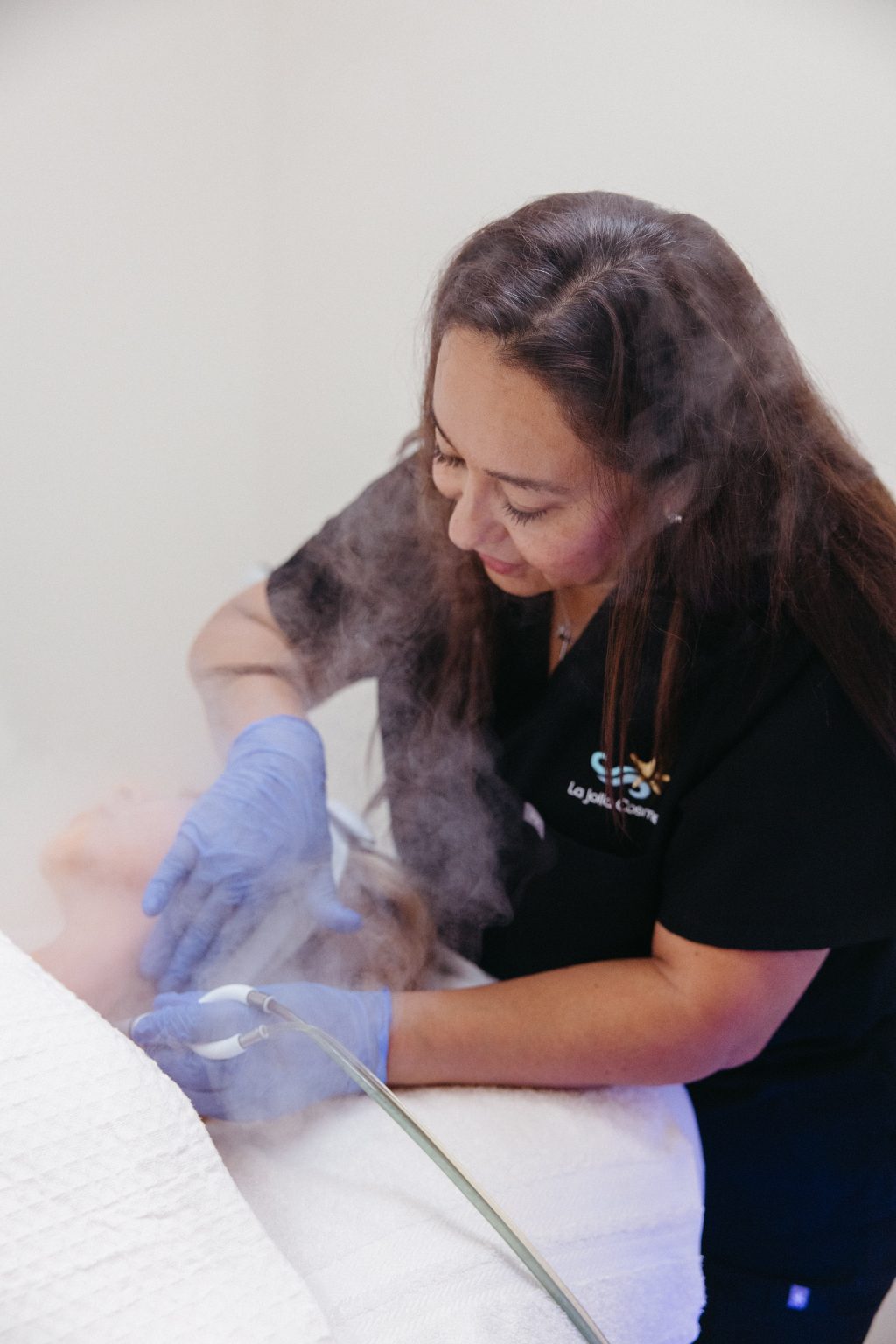
For many patients, a facial is an ideal place to begin after summer.
And no, it’s not simply about pampering.
A well-selected facial can act as a clinical reset, helping address surface buildup, dehydration, and low-level inflammation while supporting healthier barrier function.
Depending on your skin, a facial can help restore hydration, calm irritation, gently exfoliate accumulated debris, and improve the skin’s overall appearance and function.
Think of this stage as:
Stabilize before you stimulate.
Healthy, hydrated skin generally heals better, responds more evenly, and is better prepared for advanced treatments.
Step 3: Build a Strong At-Home Skincare Routine
Professional treatments may happen periodically, but your skincare routine is working every day.
That’s why medical-grade skincare can play such an important role in maintaining and supporting your results between appointments.
After summer, a skincare plan may focus on four key areas:
Antioxidant support: Ingredients such as vitamin C can help support brighter-looking skin while providing antioxidant protection.
Barrier repair and hydration: Ceramides, hyaluronic acid, glycerin, and other barrier-supporting ingredients can help the skin retain moisture and restore healthy function.
Pigment regulation: Carefully selected products can help gradually improve uneven tone while minimizing unnecessary irritation.
Retinol: Once the skin is no longer irritated or recently sun-exposed, retinol may be carefully reintroduced to support cell turnover and improve texture. The key is to start slowly rather than immediately returning to an aggressive routine.
Your home routine isn’t separate from your professional treatments—it helps support them.
Without consistent skincare, pigmentation may return more quickly, treatment results may fade sooner, and the skin can become reactive again.
Step 4: Begin Controlled Correction With Chemical Peels
Once your skin barrier is stable, it’s time to begin moving from recovery into correction.
Chemical peels can be an effective next step for concerns such as surface pigmentation, uneven tone, rough texture, and dullness.
They work through controlled exfoliation, helping remove damaged surface cells and encourage cell turnover to reveal brighter, more even-looking skin.
The goal after summer isn’t aggressive stripping.
It’s gradual resurfacing.
Starting with an appropriate light- or medium-depth peel and building progressively over a series can help improve the skin while respecting its current condition.
For some patients, peels can also help prepare the skin before moving into more advanced laser treatments.
Step 5: Advance Carefully With Moxi
Once your skin is healthy, stable, and properly prepared, energy-based treatments may become part of your plan.
Moxi, a non-ablative laser treatment, can be an early-fall option for addressing sun damage, uneven tone, mild texture irregularities, and early signs of aging.
Because Moxi is designed to provide controlled correction with relatively minimal disruption, it can serve as an entry point into laser treatments for appropriately selected patients.
As with any laser treatment, timing and patient selection matter. Your provider should consider your skin type, recent sun exposure, pigmentation concerns, and overall skin health before recommending treatment.
The Post-Summer Skin Strategy
Post-summer skin recovery isn’t about choosing one “perfect” treatment. It’s about doing things in the right order.
Analyze → Reset → Support → Correct → Advance
Start by understanding what’s happening within your skin. Restore hydration and barrier function. Support your skin every day with an appropriate home routine. Then gradually introduce corrective treatments such as chemical peels and, when appropriate, laser treatments like Moxi.
This layered approach isn’t necessarily the fastest—but that’s the point.
Skin repair and correction take time. Tone, texture, hydration, and overall skin quality typically improve progressively rather than overnight, and the best treatment plan may involve a combination of at-home skincare and professional treatments.
Ready to Reset Your Skin for Fall?
If your skin looks more uneven, dull, dehydrated, or textured after summer, you don’t have to immediately reach for the most aggressive treatment.
Start by finding out what your skin actually needs.
At Best Self, we take a skin-first approach to post-summer recovery, beginning with analysis and barrier support before progressing into more corrective treatments when your skin is ready.
Because when it comes to creating lasting results, healthy skin responds better, prepared skin gets better results, and doing things in the right order matters more than doing them the fastest.